
Do You Need to Winterize Your Pool
in Hilton Head and Bluffton?
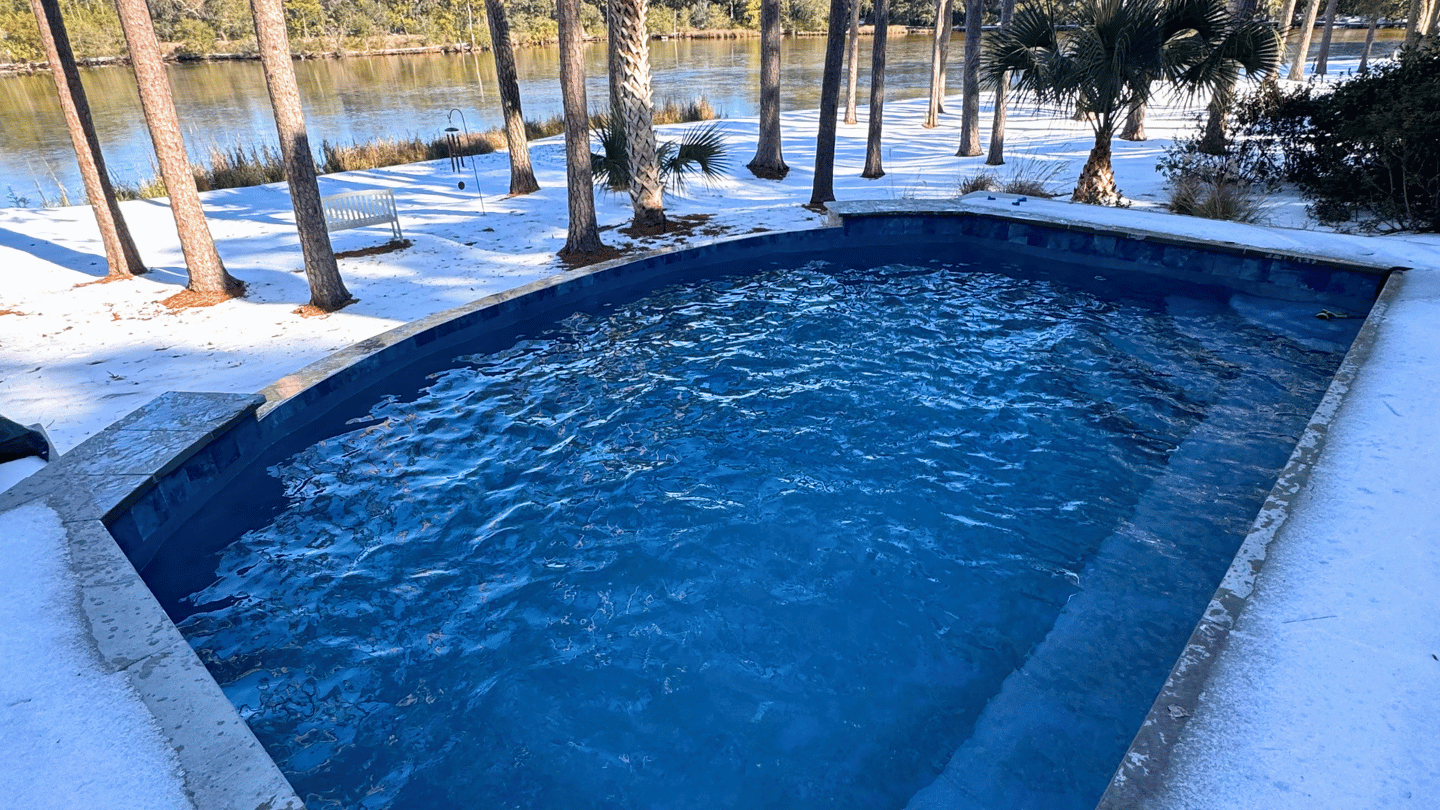
If you moved to the Lowcountry from a colder climate, leaving your pool open through winter may feel unfamiliar. If you’ve lived here for years, mild afternoons may make winter preparation easy to overlook.
Both situations lead to the same question: what does your pool need when swimming slows down, but the system keeps running?
A few details shape the answer. Cooler water can reduce chlorine demand. A heater doesn’t automatically provide freeze protection. And a running filtration pump may leave water sitting still in a separate waterfall or fountain line.
Understanding those differences helps you choose the right winter approach for your pool.
Does your pool need to close for winter?
Some Lowcountry pools continue operating through winter with continued maintenance and cold-weather protection. Others undergo professional seasonal closure, which prepares equipment and plumbing for inactivity.
Pentair’s winter guidance for warmer climates recognizes continued operation as an option while emphasizing preparation for freezes and power outages.
Adding a cover can help manage debris, but it doesn’t prepare the equipment and plumbing for freezing temperatures. That requires its own assessment.
Can you use fewer chemicals when the water gets cold?
Cooler water and reduced swimming can lower chlorine demand. Continuing the same sanitizer treatment without checking the water can supply more than the pool needs.
Manufacturer guidance recommends monitoring chlorine during colder weather to avoid overchlorination. Hayward’s water-care guidance
Use matters, too. Heating the water and welcoming swimmers can change demand again. A treatment plan suited to several quiet weeks should be reassessed when the pool returns to use.
For rental owners, sharing guest schedules and heating plans with the service team helps care follow those changes.
Should your pump run less during winter?
Possibly, but shortening the schedule can affect more than filtration.
In a saltwater pool, fewer pump hours can mean less time available to produce chlorine.
Routine scheduling and the system’s response to freezing weather should be considered separately.
Does cold water change how a salt system works?
Your salt system may produce less chlorine in winter, even if you haven’t changed its settings. At sufficiently low water temperatures, some systems stop production automatically.
A cold-water shutdown doesn’t necessarily indicate a failed cell. It also doesn’t establish that the pool has enough chlorine. Testing determines whether the sanitizer level is adequate and whether another chlorine source is needed while production is suspended.
Your pump can be circulating water normally while your salt system produces no chlorine. Pentair’s salt-system guidance
If the pump is running, is the whole pool protected from freezing?
Not necessarily. Protection depends on where the water is moving.
On many automated systems, enabled freeze protection turns the filtration pump on as air temperatures approach freezing, even outside its normal schedule.
On some shared pool-and-spa systems, freeze protection alternates circulation between the two. Separate water features may need their own settings or preparation. Pentair’s freeze-protection documentation
A winter review should establish how the system accounts for:
- The main filtration pump and its plumbing.
- An attached spa.
- Waterfalls, fountains, and deck jets.
- Any cleaner booster pump.
It’s important to note that having freeze protection on the controller doesn’t establish that every feature is included.
Does a heater keep the pool safe from freezing?
A heater doesn’t necessarily turn on when freeze protection activates. Water circulating through it and the heater actively warming that water are separate functions.
Automatic freeze protection also has limits. Manufacturer guidance describes it as intended for short freezing periods and warns that it doesn’t guarantee protection during extended freezes or power outages. Jandy’s freeze-protection guidance
Heating for swimmers and protecting equipment during cold weather need to be considered separately, particularly where heating is requested only for guest stays.
What if you’ll be away during winter?
Your service team should know when the pool will be used, whether heating is planned, and who can respond locally.
That includes an agreed contact for a power outage during freezing weather. Without a functioning backup power source, protection that depends on a running pump can’t operate when electricity is lost.
The appropriate response depends on the equipment and plumbing. Establishing it in advance avoids asking someone unfamiliar with the system to make urgent decisions.
Why think about winter pool care now?
Fall gives you time to establish how the pool will be used through the coming months: quiet weeks, holiday visitors, rental stays, or a seasonal closure. Sharing those plans now gives your service team a basis for adjusting treatment and operating schedules.
Plan Ahead for Winter Pool Care
Every pool has different needs when temperatures drop. Whether you plan to keep your pool running through winter or prepare it for a seasonal closure, understanding your equipment and making a plan before freezing weather arrives can help you avoid preventable problems.
Clearwater Pool Service of Hilton Head provides customized pool maintenance and equipment support for homeowners and property managers throughout Hilton Head Island and Bluffton. Contact our team to discuss a winter care plan that fits your pool, your equipment, and how you plan to use it.