
Can You Maintain a Pool Using Only Chlorine?
Here's What Most Pool Owners Miss
Short Answer
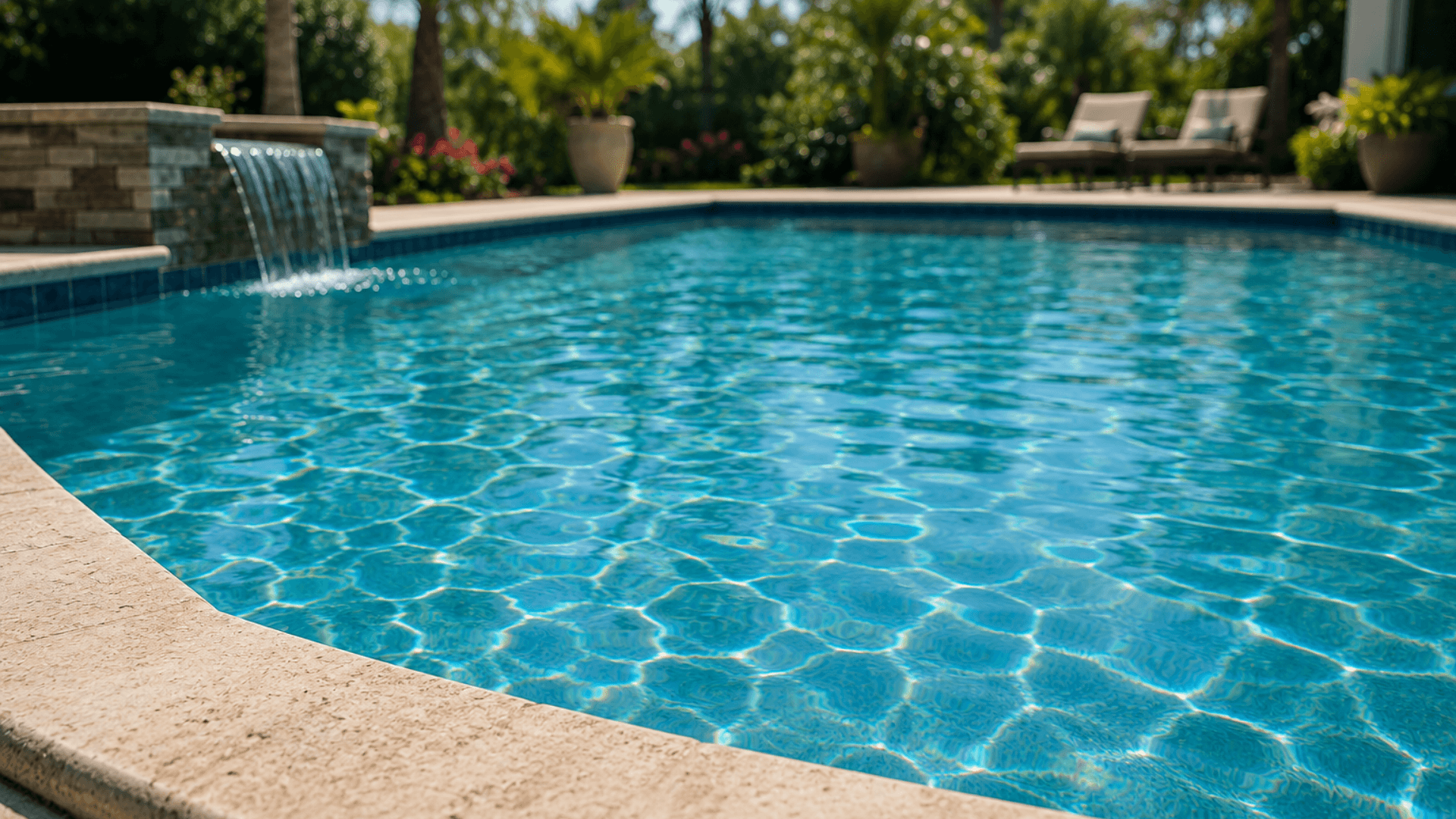
Many pool owners believe that if their water is clear and their chlorine level tests correctly, their pool is balanced.
That’s a common misconception.
Chlorine is responsible for sanitizing your pool, but it is only one part of healthy water chemistry. A pool can appear crystal clear while pH, total alkalinity, calcium hardness, or stabilizer levels have drifted outside their recommended ranges. Over time, those imbalances can affect swimmer comfort, reduce chlorine’s effectiveness, and contribute to unnecessary wear on pool equipment and surfaces.
Can You Maintain a Pool Using Only Chlorine?
Not by chlorine alone.
Chlorine is the primary sanitizer in most residential pools. Its job is to destroy bacteria, algae, and other contaminants that enter the water.
Balanced pool water, however, depends on much more than sanitation.
A healthy pool requires multiple water chemistry factors to work together. Chlorine is one of those factors, but it is not the only one.
If chlorine is the only chemical you’re monitoring, you’re only seeing part of the picture.
What Does ‘Balanced Pool Water’ Actually Mean?
Balanced pool water means that all major water chemistry parameters are working together to create water that is safe to swim in, comfortable for swimmers, protective of pool equipment, gentle on pool surfaces, and efficient at sanitizing.
Rather than relying on a single test result, balanced water considers how each chemical influences the others.
Does Clear Pool Water Mean Your Pool Is Balanced?
No.
Water clarity tells you very little about overall chemistry.
A pool can remain perfectly clear while important chemical levels slowly move outside their recommended ranges. Some of the most expensive pool problems begin long before the water ever becomes cloudy because chemical imbalances usually develop gradually, not overnight.
Why Chlorine Isn’t the Whole Story
Several other water chemistry parameters determine how well chlorine performs and how well your pool is protected.
- pH: Helps chlorine sanitize effectively while improving swimmer comfort.
- Total Alkalinity: Helps stabilize pH and reduces sudden chemical swings.
- Calcium Hardness: Helps protect plaster, tile, and equipment from scaling or corrosive water.
Cyanuric Acid (Stabilizer): Protects chlorine from sunlight while helping maintain sanitizer levels.
Each of these affects the others. When one falls outside its recommended range, the entire water chemistry can become more difficult to maintain.
Can Too Much Chlorine Fix Poor Water Balance?
No.
Adding additional chlorine may temporarily increase sanitizer levels, but it does not correct the underlying imbalance.
If pH is too high, chlorine becomes less effective. If stabilizer becomes excessive, chlorine can become less efficient. If water balance is unstable, chlorine demand often increases.
Why Some DIY Pools Seem Fine for Years
Many homeowners say they’ve only used chlorine for years and their pool has always looked great.
Sometimes that’s true.
Pools don’t usually announce chemistry problems immediately. Water can remain clean and clear while chemistry gradually moves further away from ideal conditions. Eventually that imbalance may contribute to increased chemical consumption, scale formation, corrosion of certain components, surface wear, reduced sanitizer performance, and more difficult maintenance.
Signs Your Pool May Need More Than a Chlorine Check
- You’re adding chlorine more frequently than usual.
- Chlorine levels don’t seem to hold.
- White scale is developing on tile or equipment.
- Swimmers experience irritated eyes or skin.
- Water balance changes quickly after rain.
- Your pool becomes increasingly difficult to maintain.
The Bottom Line
Maintaining the correct chlorine level is one of the most important parts of caring for a swimming pool, but it is not the only part.
Balanced pool water depends on several chemical factors working together. While a pool may appear perfectly clear, appearance alone cannot confirm that the water is properly balanced.
Routine testing of the complete water chemistry helps protect swimmers, extend the life of your equipment, preserve pool surfaces, and make ongoing maintenance easier.
A clear pool is encouraging.
A balanced pool is what protects your investment.
Key Takeaways
- Chlorine sanitizes your pool, but it does not balance the water by itself.
- Clear water does not necessarily mean balanced water.
- pH, total alkalinity, calcium hardness, and stabilizer all influence how well chlorine performs.
- Many water chemistry problems develop gradually before becoming visible.
- Complete water testing helps protect your swimmers, equipment, and long-term investment.
Myth vs. Fact
Myth: If my pool is clear, the chemistry must be balanced.
Fact: Clear water only reflects appearance. Proper chemistry requires testing multiple water parameters.
Myth: Chlorine is the only chemical my pool needs.
Fact: Chlorine is essential, but balanced water also depends on pH, alkalinity, calcium hardness, and stabilizer levels.
Myth: More chlorine fixes every pool problem.
Fact: Chlorine cannot correct improper water balance. Other chemistry issues must also be addressed.
Frequently Asked Questions
Is chlorine the only chemical a swimming pool needs?
No. Chlorine sanitizes the water, but balanced pool water also depends on proper pH, total alkalinity, calcium hardness, and stabilizer levels.
Can pool water be clear but chemically unbalanced?
Yes. Water can appear perfectly clear while important chemical parameters have moved outside recommended ranges.
Why does my chlorine seem to stop working?
High stabilizer levels, improper pH, or other chemical imbalances can reduce chlorine’s effectiveness even when chlorine is present.
How often should pool chemistry be tested?
Chlorine and pH should be checked regularly. A complete water chemistry evaluation should also be performed periodically to ensure all major water parameters remain within recommended ranges.