
How to Tell If Your Pool Pump Has Lost Prime
Your pool pump is running, but something doesn’t seem right.
Water flow from the return jets may feel weaker than usual. You might even hear the motor running while very little water appears to be moving through the system.
These can be signs that your pool pump has lost prime.
A pump that loses prime cannot circulate water the way it should. Sometimes the reason is simple and easy to spot. Other times, especially when the problem keeps coming back, losing prime can be the first visible sign of another issue within the circulation system.
Understanding what you’re seeing can help you know when a basic check is enough and when the equipment needs a closer look.
What Does It Mean When a Pool Pump Loses Prime?
Your pool pump relies on a continuous supply of water to move water from the pool, through the filtration system, and back through the return lines.
When the pump is properly primed, its housing and suction side contain enough water for the pump to establish and maintain that circulation.
When too much air enters the system, or the pump cannot maintain the water it needs, that continuous flow can be interrupted. The pump may continue running electrically, but the motor running does not necessarily mean water is circulating normally.
That distinction is important. A pump can sound like it’s operating while struggling to move water.
Signs Your Pool Pump May Have Lost Prime
Several symptoms can point to a pump that is struggling to maintain prime. Some of these symptoms can also have other causes, so what you observe should be treated as a starting point for diagnosis.
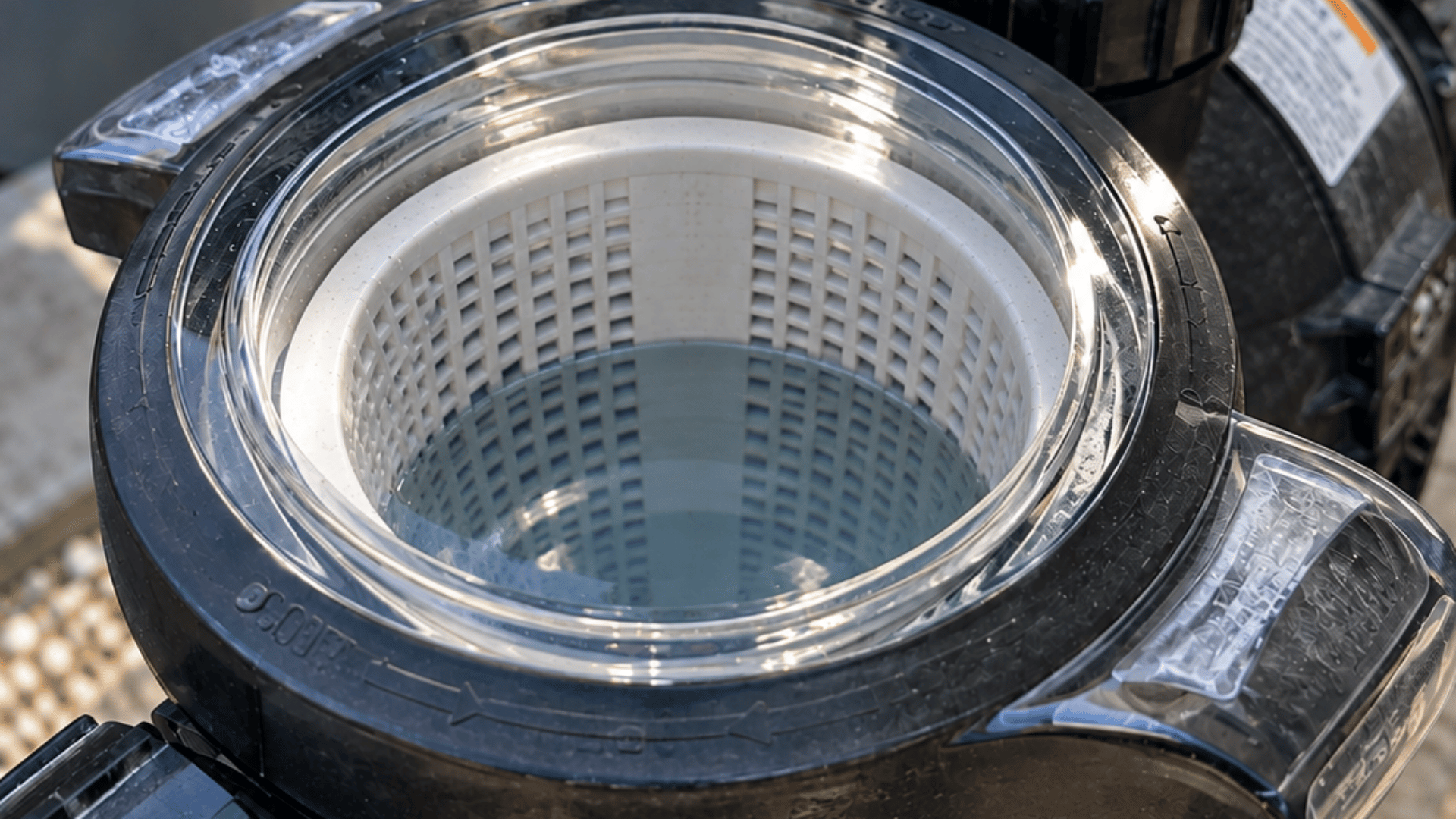
The Pump Basket Is Not Filling With Water
If the pump starts but the housing never develops steady water flow, the pump may not be establishing prime.
You may see water enter briefly, drop back down, surge, or fail to fill the housing as expected.
Weak or No Flow From the Return Jets
Your pool’s return jets give you another way to recognize a circulation problem.
If the water coming from the returns suddenly becomes much weaker than normal, or stops altogether while the pump is running, the system may not be moving water properly.
Weak return flow can have several causes, so this symptom alone doesn’t confirm that the pump has lost prime. Combined with air in the pump housing or other changes, however, it provides another useful clue.
Air Bubbles Coming From the Returns
A steady stream of bubbles coming through the pool returns can indicate that air is being pulled into the circulation system.
Those bubbles may appear alongside visible air inside the pump itself.
The Pump Struggles to Establish Flow at Startup
A pump may take a short amount of time to establish circulation when it starts. If it repeatedly struggles, never develops consistent water flow, or seems to lose that flow shortly afterward, there may be a priming or suction-side issue that needs attention.
The Pump Sounds Different
Pool owners often become familiar with the normal sound of their equipment.
A pump that suddenly sounds louder, rougher, or different while water flow appears reduced deserves attention. Changes in sound can have several causes, but they’re worth investigating when they occur alongside other circulation symptoms.
Why Does a Pool Pump Lose Prime?
Recognizing that a pump has lost prime is only part of the diagnosis.
The next question is what caused it.
Some common possibilities include:
Low pool water level. If the water level drops too far, the skimmer can begin pulling air into the circulation system.
A pump lid that is not sealing properly. The lid and its O-ring help create the seal the pump needs to pull water. Dirt, wear, damage, or an improperly seated lid can allow air into the system.
Clogged baskets or restricted water flow. A heavily clogged skimmer or pump basket can interfere with normal circulation and make it more difficult for the pump to establish consistent flow.
Air entering the suction side of the system. A problem with a fitting, seal, valve, connection, or suction-side plumbing can allow air to enter before the water reaches the pump.
Changes elsewhere in the circulation system. Valve position, equipment condition, plumbing problems, and other circulation issues can sometimes contribute to symptoms that look like a priming problem.
This is why simply getting water back into the pump doesn’t always solve the larger issue.
What If Your Pool Pump Keeps Losing Prime?
A pump that loses prime once after the water level became too low tells a different story than a pump that needs to be primed repeatedly.
If the same problem keeps returning, that pattern is useful diagnostic information.
Something may be allowing air into the system, preventing the pump from maintaining suction, or interfering with normal water flow.
You may be able to restore circulation temporarily and still have the underlying condition remain.
Repeatedly priming the pump addresses the immediate symptom. Finding out why the pump keeps losing prime addresses the cause.
That distinction becomes especially important when the obvious explanations have already been ruled out. A technician can evaluate how water and air are moving through the system and determine where the circulation problem is actually beginning.
Can You Run a Pool Pump Without Prime?
A pool pump shouldn’t be left running for an extended period when it is clearly unable to establish water flow.
Pool pumps are designed to operate with water moving through them. That water also plays an important role in the normal operation of several internal pump components.
If the pump is running while the housing remains largely dry or circulation never becomes established, allowing it to continue operating can create additional stress and potentially lead to equipment damage.
If your pump will not establish normal water flow, shutting it off and identifying the problem is safer than allowing it to continue running dry.
What Should You Do If You Think Your Pump Has Lost Prime?
Start with what you can easily observe.
Check that the pool has an adequate water level. Look for a full skimmer or pump basket. Observe the pump housing and return jets to see whether water is moving normally.
These basic observations can sometimes reveal an obvious explanation.
The situation deserves a closer look when the pump will not establish prime, loses prime again after circulation has been restored, or shows the same symptoms without an obvious cause.
At that point, the goal should be identifying where the circulation problem is coming from rather than repeatedly restarting or repriming the equipment.
Finding the Cause Can Keep the Problem From Coming Back
A pool pump losing prime is often easy to notice once you know what to look for. Determining why it happened can require more investigation.
Changes in water level, air entering the suction side, sealing problems, restrictions, and other equipment conditions can produce similar symptoms. The pattern of what the system is doing helps narrow down the actual cause.
If your pool pump is struggling to prime or repeatedly losing prime, Clearwater Pool Service can inspect the equipment and circulation system to determine what is happening and recommend the appropriate repair.
Clearwater Pool Service of Hilton Head provides pool equipment repair and service throughout Hilton Head Island and Bluffton. Call 843-682-8228 to have our team take a closer look.