
How Often Should You Need to Shock a Pool?
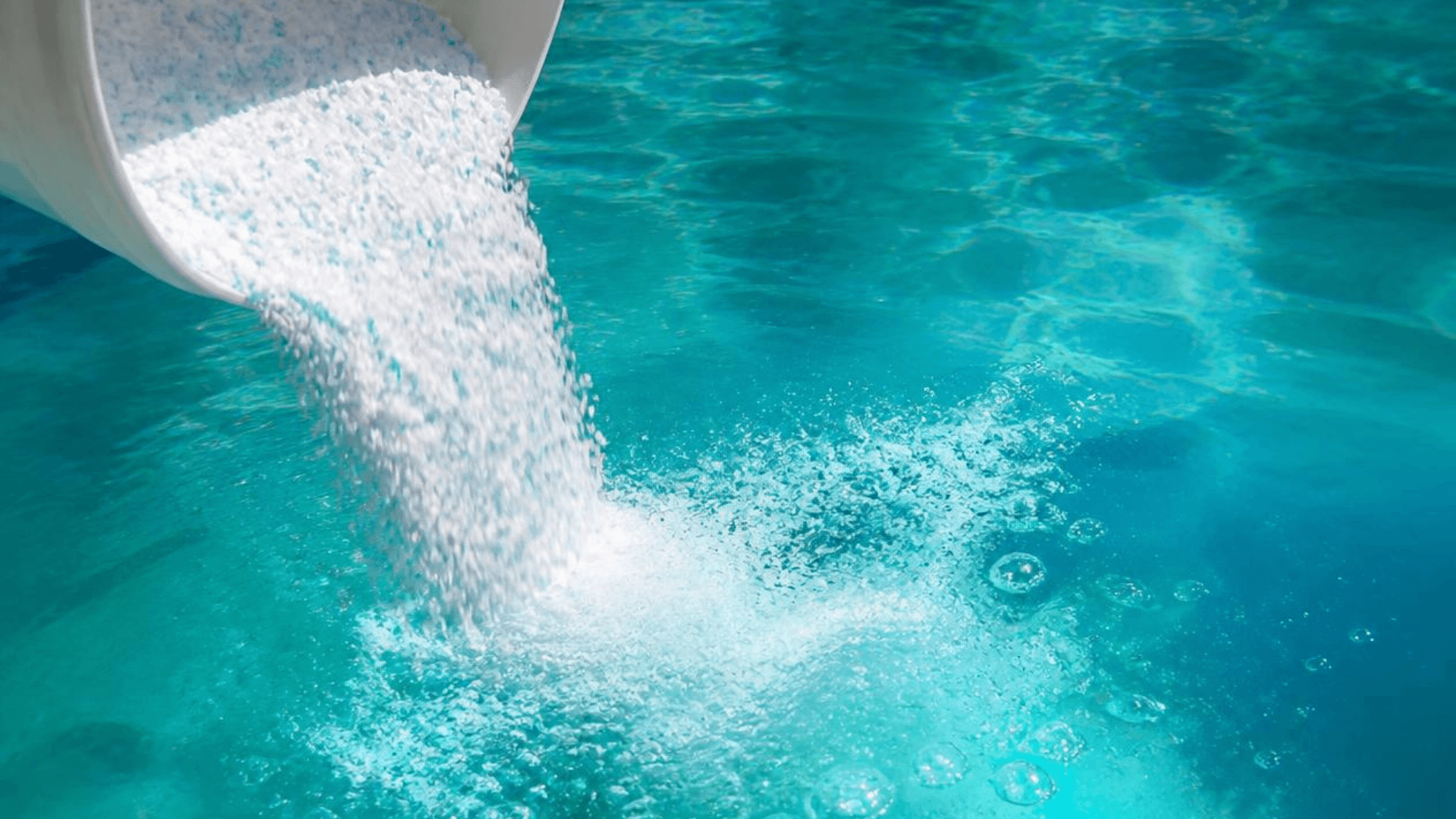
What frequent corrective treatments can tell you about your pool’s water chemistry, circulation, and maintenance.
If your pool seems to need shock every week just to stay clear, the better question may not be how much shock should I add?
It may be why does the pool keep getting to this point?
For residential pools, there is no one-size-fits-all schedule that makes shocking the water the foundation of good maintenance. Consistent pool care starts with keeping sanitizer, pH, circulation, filtration, and the rest of the water chemistry where they need to be.
Shock treatments have legitimate uses. But a pool that repeatedly needs a major chemical correction may be telling you that something else deserves attention.
Should You Shock a Pool Every Week?
Not necessarily. A residential pool should be maintained around consistent water chemistry rather than relying on shock as a weekly rescue treatment.
A well-maintained pool can still occasionally need shock or another corrective treatment. Heavy use, contamination, algae, combined chlorine, unusual weather conditions, or other changes can alter what the water needs.
But if the same pool continually needs to be brought back from cloudy, green, or poorly balanced water, we want to know why.
Why Does My Pool Keep Needing Shock?
Repeatedly needing a major chemical correction can have several possible causes.
- The sanitizer level is not staying consistent
Chlorine gets used up as it does its job. Sunlight and contaminants introduced by swimmers can also reduce the amount of available chlorine in the water.
If chlorine repeatedly falls too low between treatments, simply adding another large dose may correct the immediate reading without explaining why the pool is struggling to maintain an appropriate level.
- The pH is working against the chlorine
Chlorine does not work independently of the rest of the water chemistry.
pH directly affects chlorine’s ability to kill germs. When pH moves outside the appropriate range, chlorine can become less effective even when chlorine has been added to the pool.
That is one reason professional water care looks at the pool as a system rather than treating one chemical reading at a time.
- The pool is experiencing a heavier swimmer load
Every swimmer introduces substances into the water that chlorine has to handle, including sweat, dirt, body oils, skin cells, and other contaminants.
A pool that sees significantly more use may therefore have very different chemical demands than the same pool during a quiet week.
For Hilton Head vacation rentals in particular, occupancy and pool use can change quickly from one group of guests to the next.
- Circulation or filtration may need attention
Chemistry is only one part of maintaining clear water.
The pump has to move water effectively. The filtration system has to remove debris and contaminants. Water needs to circulate through the pool instead of leaving areas with poor movement.
If there is an underlying circulation, filtration, or equipment issue, repeatedly correcting the chemistry may address what you can see without addressing what is contributing to it.
- Algae or contamination has already developed
Once algae or other contamination has taken hold, a corrective treatment may be entirely appropriate.
The bigger concern is when the same problem keeps returning.
Recurring algae can point to a need to look beyond the immediate treatment and evaluate sanitation, water balance, circulation, filtration, maintenance practices, and the conditions surrounding the pool.
When Is Shocking a Pool Necessary?
Corrective treatment is appropriate when dealing with algae, certain contamination events, unusual water conditions, or circumstances identified through proper testing.
So the goal is not to avoid shock at all costs.
The goal is to use it for a reason, rather than allowing it to become the default answer every time the pool starts looking different.
A Clear Pool and a Well-Maintained Pool Are Not Always the Same Thing
Pool water can look clear while chemistry is beginning to move in the wrong direction.
On the other hand, a pool can temporarily become cloudy for reasons that require more investigation than simply adding chlorine.
That is why appearance alone does not tell the whole story.
Professional pool maintenance involves looking at the pattern:
- Is the sanitizer holding between visits?
- Is the pH staying within the appropriate range?
- Is the filtration system performing properly?
- Is the water circulating the way it should?
- Are chemical corrections becoming larger or more frequent?
- Has pool use changed?
- Is an equipment problem beginning to affect water quality?
The individual reading matters. The pattern behind the reading can tell us much more.
The Healthiest Approach Is Consistency
There is a simple idea behind all of this:
The healthiest approach to pool care is to keep the water from repeatedly reaching the point where it needs to be rescued.
That doesn’t mean a properly maintained pool will never need shock.
It means shock should be one tool available to solve a specific problem, not the entire maintenance strategy.
For Clearwater, good pool care means watching what the water and equipment are doing over time, making smaller adjustments when possible, and catching changes before they become larger problems.
That is what consistent maintenance is designed to do.
Frequently Asked Questions
Does every pool need to be shocked once a week?
No universal weekly shock schedule applies to every residential pool. What a pool needs depends on its water chemistry, sanitizer system, swimmer load, environmental conditions, equipment, and other factors. Routine maintenance should focus first on keeping the pool within appropriate operating conditions.
Why does my pool keep getting cloudy even after I shock it?
Cloudy water can have more than one cause. Water chemistry, filtration, circulation, contaminants, swimmer load, and equipment performance can all play a role. If cloudiness keeps returning after treatment, identifying the underlying cause is more useful than repeatedly treating the appearance alone.
Is pool shock the same thing as chlorine?
Not always. “Shock” is used broadly in the pool industry, and products marketed for shock treatment may contain different active ingredients or perform different functions. Some treatments increase chlorine substantially, while other products are designed primarily to oxidize contaminants. Always follow the product label or the treatment recommended for the specific water condition.
Can you put too much chlorine in a pool?
Yes. More chlorine is not automatically better. Pool chemicals should be used according to testing, product instructions, and appropriate water-treatment practices. Very high chlorine levels can also interfere with some testing methods.
When can you swim after shocking a pool?
There is no single waiting period that applies to every shock product or treatment. Follow the manufacturer’s label and confirm that the water has returned to the appropriate swimming range before allowing swimmers back into the pool.
What should I do if my pool constantly needs shock?
Start by identifying the pattern rather than automatically increasing the amount of chemicals being added. Water chemistry, sanitation, filtration, circulation, pool use, and equipment performance may all need to be evaluated.
Pool Maintenance in Hilton Head Island and Bluffton, SC
If your pool repeatedly needs large chemical corrections, Clearwater Pool Service can evaluate more than the symptom you are seeing at the surface.
Our maintenance and repair teams work with pools throughout Hilton Head Island and Bluffton, helping homeowners keep water chemistry, circulation, filtration, and equipment working together.
A pool should be ready when you are. We’ll help keep it that way.
Give us a call at 843-682-8228.