
Signs Your Pool Equipment Needs Repair
Pool equipment doesn’t fail all at once. It gives you signals for weeks before something quits completely, and most owners miss them because the signs look minor until they’re not. Catching those signs early is how pool repair on Hilton Head Island stays a one-visit fix rather than a full equipment replacement. The coastal heat, salt air, and heavy swim seasons push everything harder than most climates do, and warning signs here tend to arrive earlier.
What Your Pump and Filter Are Telling You
A grinding or screeching noise from your pump is a bearing starting to fail, not background noise you adjust to. Reduced flow from your return jets, even when the pump sounds like it’s running normally, usually points to a clogged impeller or a motor losing pressure capacity. If the pump runs hot to the touch or trips the breaker consistently, those patterns don’t resolve on their own.
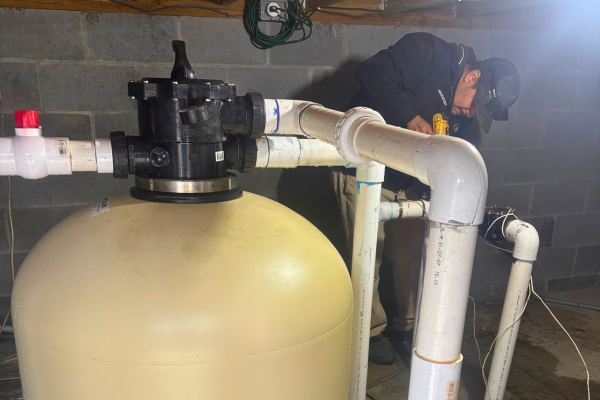
On the filter side, high pressure on the gauge combined with water that won’t fully clear after chemical treatment usually means a filter that’s maxed out or has a broken internal component. Coastal pools load up filters faster than most, with pollen seasons that arrive early, live oak tannins that cloud the water brown, and organic material blowing in off the marsh.
Heater and Electrical Warning Signs Worth Acting On
If your heater runs but takes noticeably longer to reach temperature, or cycles on and off without holding steady, the heat exchanger may be partially blocked from scale or early-stage corrosion. Catching that before the unit stops starting entirely is usually the difference between a repair call and a replacement.
On the electrical side, breakers that trip repeatedly, lights that flicker or go dark, and automation systems that respond inconsistently are all signs the equipment is working against something. Salt air is hard on electrical connections and enclosures over time. What looks like an automation glitch is often corrosion at the junction box or a failing connection that will eventually take out more than just one component.
Delaying Pool Repair on Hilton Head: The Full Cost
Equipment problems compound in ways that are predictable once you know what to look for. A pump running on a failing bearing will eventually seize, and the stress that puts on surrounding components rarely stays isolated. A filter operating at high pressure adds to the load on the pump pulling through it, while a heater with scale buildup uses more energy and wears out faster than it should.
The timing cost matters as much as the repair cost. Equipment failures on rental properties in the Lowcountry tend to land during peak season, when pools are most in use and technicians and parts are most in demand. The repair that takes one visit in April can turn into a week-long disruption in July with bookings on the line.
If something about your pool equipment seems off, call Clearwater Pool Service at 843-682-8228. We service pools across Hilton Head Island and Bluffton and can assess what’s happening before a minor issue turns into a major repair.